Anxiety is a word that is being used more frequently within our society in recent times. It is a huge topic so it’s really difficult to cover everything in one update, therefore, this week I wanted to talk about ‘comfort zones’. This is something that is closely linked to our feelings of anxiety and understanding the techniques used to overcome this big and at times, life changing, emotion can be really helpful.
Comfort Zones.
Comfort zones are our emotional safe spaces. When we are in our comfort zone then the part of our brain (the amygdala) that worries in order to protect us can relax.
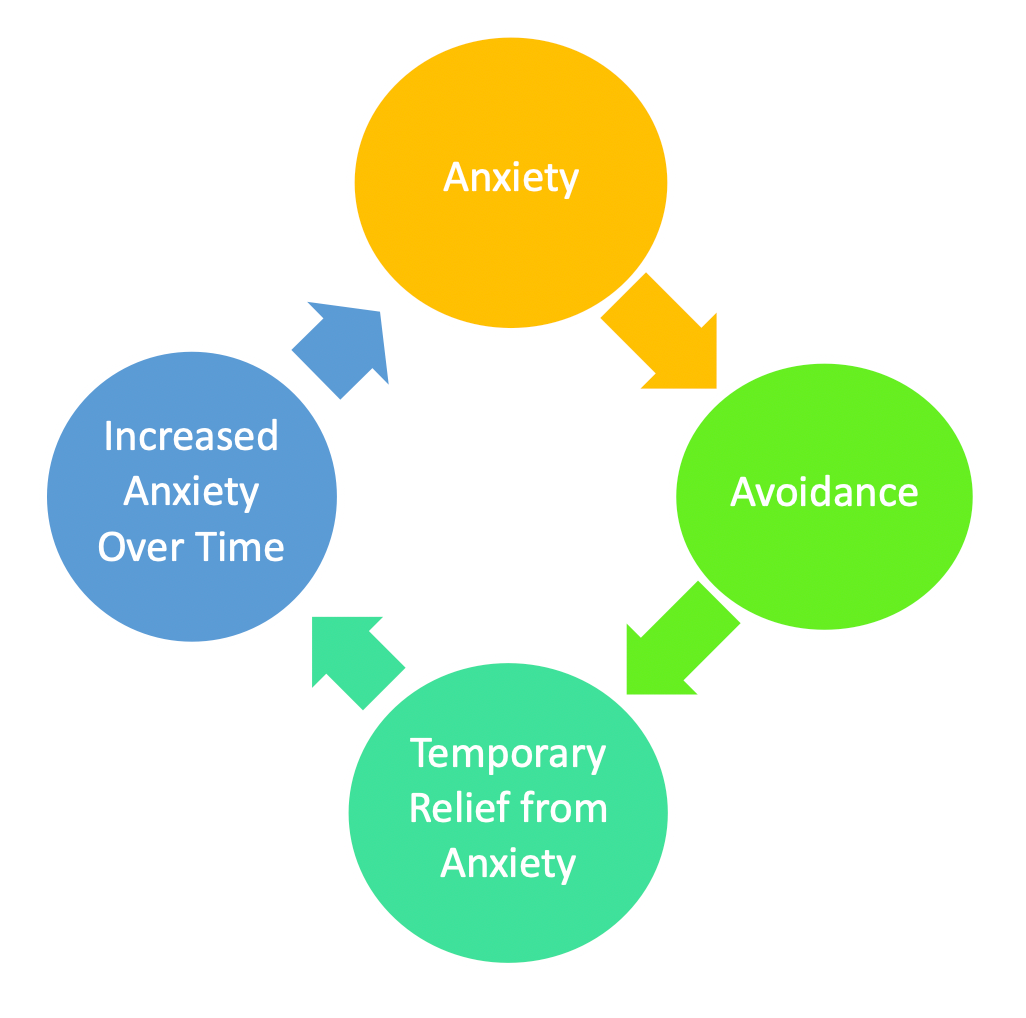
The problem with this is that when we give into our anxiety and stay within our safe space our anxiety learns to find something else to worry about. This is when the anxiety cycle begins.
As you can see from the image below, when we have feelings of anxiety, the easiest thing to do is to avoid the very thing that is making us anxious. Immediately, the person will feel relief from this uncomfortable feeling, however, this is a very short term relief as the avoidance itself will lead the anxiety to increase over time.
When I’m working with children I always use the example of task avoidance at school. For example, if a child is worried about a maths lesson because they didn’t do their homework then they might find a way of avoiding that lesson, perhaps by not going to school that day. This will lead to short term relief as they don’t have to attend their maths class. However, the worry about attending their next maths lesson is now going to increase because on top of their initial worry of missing their homework, they have now missed an extra lesson.
These feelings of anxiety can escalate beyond what some people feel is within their control very quickly. Over the years I have worked with many children who now suffer from school avoidance because of falling victim to this anxiety cycle. Breaking the cycle can feel scary and quite often, a lot of extra support is required.
If we can imagine our comfort zone to be a circle. A circle that we feel we must live within in order to stay safe and allow our worries to rest. Learning how to step out of that circle every now and then and proving to ourselves that it is safe to do so is the best way to allow our amygdala to ease off on the worry and to stop sending signals to the rest of our brain that danger is imminent. This, in turn, allows this circle to expand and confidence to grow.
Within a counselling session we can begin to look into where the initial feelings of anxiety have originated from. Giving the client the opportunity to process their emotions whilst also feeling heard and therefore empowered to explore at a greater depth.
At CJH Youth Counselling, I understand that there is no quick fix for anxiety. I offer counselling sessions to help process these big emotions which, at times, can feel as though they dominate a young person’s life.
The anxiety workshop is also a really helpful way to understand and learn the tools and techniques that a person can use to help overcome these feelings. We closely look at ‘comfort zones’, the topic discussed here today, as well as many others.
The crucial element on the workshop and counselling is to sow the seeds that, overtime, the client will be able to grow and use, leading to a new outlook on their worries and therefore, a better quality of life.